
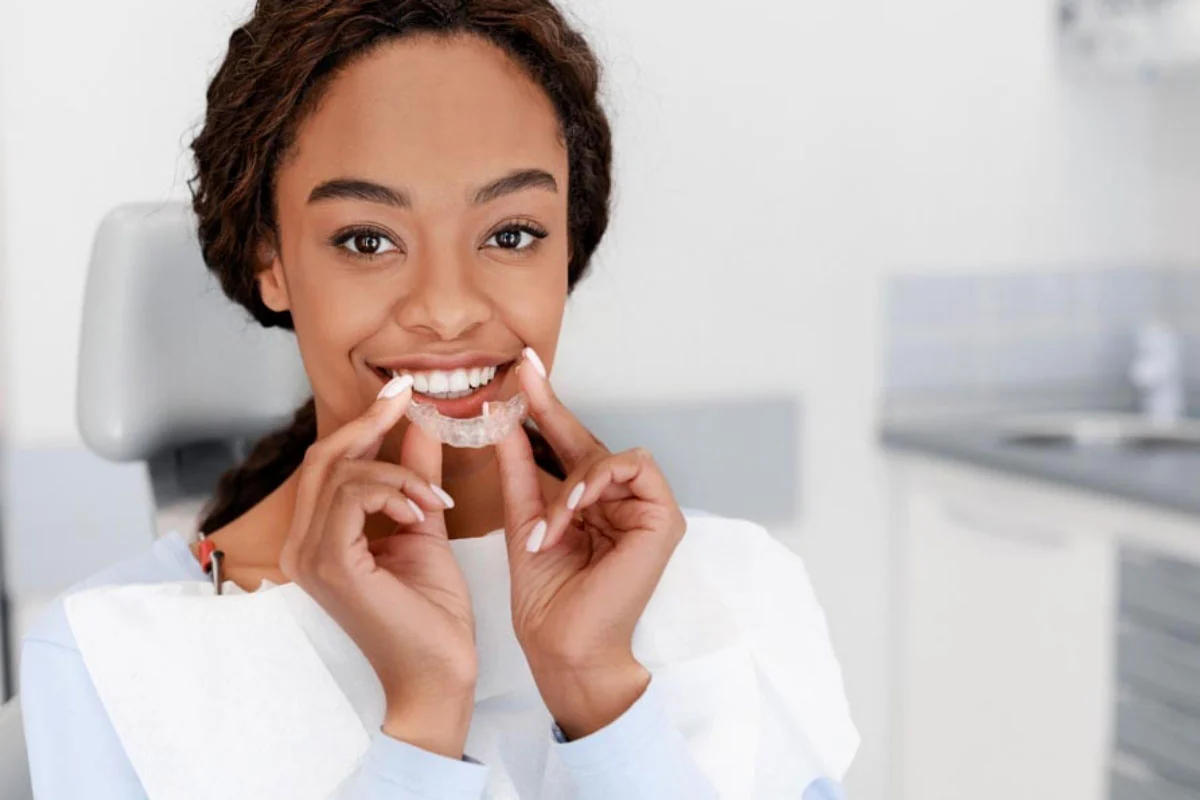
Choosing between traditional braces and clear aligners is one of the most common decisions adults face when considering orthodontic treatment. Both options can produce beautiful, lasting results, but the right choice depends on your bite, lifestyle, and goals. The husband-and-wife team at Cochituate Smile Center approaches the braces vs. clear aligners decision for adults with the same evidence-based perspective they bring to their clinical roles and their work at Tufts University School of Dental Medicine, helping you make an informed choice for a lifetime of healthy, confident smiles. Patients across Framingham, MA come to us with this exact question every week.
What Are Braces and Clear Aligners?
Braces and clear aligners are two evidence-based orthodontic treatments that gradually move teeth into proper alignment. Traditional braces use metal or ceramic brackets bonded to each tooth, connected by archwires that apply steady force. Clear aligners, such as Invisalign and Spark, are removable transparent trays worn in sequence to shift teeth precisely over time. Both rely on careful planning and professional supervision.
What Should You Know About Traditional Braces?
Traditional braces have been refined over decades into a highly predictable orthodontic tool. The system consists of three primary components working together:
- Brackets bonded directly to the front surface of each tooth
- Archwires that thread through brackets and apply directional force
- Elastic ties or bands that secure the wire and add corrective pressure
Modern braces are smaller, smoother, and more efficient than older versions, with ceramic options available for adults who want a less noticeable look. Because they're fixed to the teeth, braces deliver constant, around-the-clock force without relying on patient compliance.
What Should You Know About Clear Aligners?
Clear aligners are custom-fabricated from medical-grade thermoplastic, designed using 3D digital scans of your teeth. Each tray in the series moves specific teeth a small amount, and you progress to the next tray every one to two weeks. Popular systems used in adult treatment include:
- Invisalign – widely studied and well known for adult cases
- Spark™ clear aligners – ultra-clear with strong stain resistance
- Other FDA-cleared systems prescribed based on case complexity
Aligners are removable for eating, brushing, and flossing, which many adults find appealing for both hygiene and social reasons.
Why Are More Adults Choosing Orthodontic Treatment?
Orthodontic treatment is no longer just for teens. Adults now make up a significant share of orthodontic patients, motivated by reasons that go beyond appearance:
- Correcting shifting that occurs naturally with age
- Addressing relapse from previous orthodontic treatment
- Improving bite function and reducing uneven wear
- Making teeth easier to clean to support long-term gum health
- Boosting confidence in professional and personal settings
It's never too early or too late to consider orthodontic treatment. Both braces and aligners require a professional diagnosis, imaging, and ongoing supervision by a qualified dental professional to ensure the teeth and supporting bone respond well to treatment.
How Does Each Treatment Work to Move Teeth?
Braces and clear aligners both rely on the same biological principle: controlled force applied to teeth stimulates bone remodeling, allowing teeth to shift into new positions. The difference lies in how that force is delivered and managed throughout treatment.
How Do Braces Move Teeth?
With traditional braces, the orthodontist uses the archwire as the engine of movement. At each visit, the wire is adjusted, replaced, or activated to guide specific teeth in the desired direction. Key points to understand:
- Brackets act as handles, giving the wire precise control over each tooth.
- Wires are changed in sequence, moving from flexible to stiffer materials as treatment progresses.
- Elastics may be added to correct bite relationships between upper and lower teeth.
- Adjustments typically occur every 4 to 8 weeks.
Because braces work continuously, they don't depend on patient cooperation for wear time. This makes them especially reliable for cases that require complex tooth movement or significant bite correction. As clinicians who also teach at Tufts University School of Dental Medicine, our team applies the latest biomechanical research to every adult case.
How Do Clear Aligners Move Teeth?
A different strategy drives aligner treatment: a planned series of trays, each slightly different from the last, that collectively guide teeth into position. The treatment plan is mapped out digitally before the first tray is worn, allowing your orthodontist to preview the final result.
Important elements of aligner treatment include:
- Each tray is designed to produce a small, controlled movement
- Trays are typically worn 20 to 22 hours per day
- Patients switch to the next tray every 1 to 2 weeks as prescribed
- Small tooth-colored attachments may be bonded to teeth to help grip the aligners
- Progress is monitored through in-office visits or, in some cases, remote scanning
How Do Compliance and Monitoring Differ?
The biggest functional difference between the two systems is compliance. Braces work whether you think about them or not. Aligners only work when they're in your mouth. Adults with busy schedules need to be honest with themselves about whether they'll consistently wear their trays for the recommended hours each day.
Either way, your dental professional will monitor your progress, check tooth movement against the treatment plan, and make refinements as needed. At our practice, treatment plans are guided by orthodontic expertise rooted in academic teaching and hands-on clinical experience.
Benefits of Braces and Clear Aligners for Adults
Both options can deliver healthy, beautiful smiles, but they offer different advantages depending on what matters most to you. Understanding these benefits helps you weigh esthetics, lifestyle, and clinical outcomes side by side.
What Are the Benefits of Clear Aligners?
Many adults choose clear aligners for several reasons:
- Nearly invisible appearance, making them well-suited for professionals and social settings
- Removable for eating, so there are no food restrictions
- Easier oral hygiene, since you can brush and floss normally
- Smooth plastic surfaces that tend to be gentler on cheeks and lips
- Fewer in-office visits in many cases, with shorter appointment times
- Predictable digital planning that previews your results before treatment begins
For adults who want orthodontic treatment without obvious hardware, aligners offer a discreet option that blends into daily life. Many of our patients in Framingham, MA appreciate how naturally the trays fit into a packed work schedule.
What Are the Benefits of Traditional Braces?
Fixed braces remain a powerful tool, especially for cases that demand precise control:
- Highly effective for complex cases, including significant rotations and bite issues
- No compliance required for wear time, since they're fixed in place
- Nothing to lose or misplace, unlike removable trays
- Often the most efficient option for certain difficult tooth movements
- Ceramic options available for adults who want a more subtle look
What Benefits Do Both Options Share?
Regardless of which method you choose, the long-term advantages of straightening your teeth are substantial:
- Improved bite function and chewing efficiency
- Better access for daily brushing and flossing
- Reduced risk of uneven tooth wear and jaw discomfort
- Long-term support for gum and periodontal health
- A noticeable boost in confidence
Whichever option is right for you, the goal at our practice is the same: healthy, confident smiles built on sound orthodontic principles.
Braces vs. Clear Aligners for Adults: Side-by-Side Comparison
When weighing braces vs. clear aligners for adults, it helps to compare them across the categories that matter most. The table below summarizes how each option performs, followed by a deeper look at the clinical research and lifestyle factors that shape the final recommendation.
| Factor | Traditional Braces | Clear Aligners |
|---|---|---|
| Appearance | Visible (ceramic less noticeable) | Nearly invisible |
| Removability | Fixed to teeth | Removable for meals and hygiene |
| Best for | Complex bite and rotation cases | Mild to moderate alignment issues |
| Compliance needed | Minimal | High (20–22 hours/day) |
| Eating restrictions | Avoid hard, sticky foods | No restrictions (trays removed) |
| Oral hygiene | More technique needed | Brush and floss normally |
| Comfort | Some irritation from brackets/wires | Smooth plastic, occasional pressure |
| Office visits | Typically every 4–6 weeks | Often every 6–10 weeks |
| Treatment time | Generally 12–24 months | Generally 6–24 months, case-dependent |
What Does the Clinical Research Say About Effectiveness?
Studies comparing the two options consistently show that both can produce excellent results when properly prescribed. According to literature reviewed by the American Association of Orthodontists (AAO), clear aligners perform very well for mild to moderate cases involving crowding and spacing, while fixed braces remain the preferred tool for more complex orthodontic problems, including significant rotations, severe crowding, and major bite corrections.
That said, aligner technology continues to advance rapidly, expanding the range of cases that can be treated successfully without brackets and wires.
How Does Comfort Compare Between the Two?
Many adults report that aligners feel less intrusive day-to-day:
- Smooth trays sit against the teeth without brackets rubbing against cheeks or lips
- Routine wear rarely leads to emergency visits for broken wires
- Pressure tends to feel like gentle tightness, especially when starting a new tray
Braces, while sometimes causing initial soreness after adjustments, are familiar, predictable, and don't require any decisions throughout the day.
How Does Each Option Fit Your Lifestyle?
Your daily life matters more than you might think. Consider:
- Do you have frequent meetings, presentations, or public-facing work?
- Will you remember to wear aligners 20 to 22 hours per day?
- Are you comfortable carrying a case for trays when you eat out?
- Do you play contact sports or musical instruments?
Honest answers to these questions often clarify which option will deliver the best experience and result.
Cost Factors: What Adults Should Expect to Pay
In many practices, braces and clear aligners fall within a similar price range, and the final cost is determined after a clinical exam, imaging, and a customized treatment plan. Adult orthodontic treatment costs vary based on case complexity, treatment length, and the type of appliance used, not simply braces versus aligners. Insurance, FSA, and HSA accounts can often help offset orthodontic fees for our patients in Framingham, MA.
What Drives the Cost of Orthodontic Treatment?
Several variables influence what an adult will invest in treatment:
- Case complexity – more difficult tooth movements require more time and planning
- Treatment duration – longer cases typically cost more
- Number of aligners or adjustments – complex plans may need additional trays or wire changes
- Provider expertise – treatment by an experienced orthodontist may differ from limited-service providers
- Refinements or repairs – additional aligners or broken-bracket repairs can affect total cost
- Retainers – essential for maintaining results after active treatment
How Can Insurance and Payment Support Help?
Many adult patients are surprised to learn that orthodontic benefits may apply to their plan. Our team helps verify your benefits and explains your options clearly. We accept MassHealth and most major dental insurance providers, and offer:
- 0% interest financing options on orthodontic treatment
- Affordable monthly financing options
- Membership plan options for patients without insurance
- FSA and HSA account compatibility
How Do You Get a Personalized Estimate?
Because every smile is different, accurate cost information always comes from a clinical consult. During your visit, your dental professional will examine your teeth, review imaging, and discuss which options are appropriate for your case before quoting a price. This consult-based approach prevents surprises and ensures that your treatment plan reflects your actual clinical needs. Patients throughout Framingham, MA find that a personalized estimate clears up far more than any online calculator can.
Who Is a Good Candidate for Each Option?
Most healthy adults are candidates for some form of orthodontic treatment, but the right choice depends on your bite, oral health, and lifestyle. A clinical exam is the only way to know for certain, but the following general guidelines help set expectations.
Who Is a Good Candidate for Clear Aligners?
Removable aligners tend to work well for adults who:
- Have mild to moderate crowding or spacing
- Want to address shifting from prior orthodontic relapse
- Need bite refinement rather than major correction
- Can commit to wearing trays 20 to 22 hours per day
- Want a discreet, removable option that fits a professional lifestyle
Who Is a Good Candidate for Traditional Braces?
Fixed braces are often the better choice for adults with:
- Significant crowding or severe rotations
- Complex bite problems, including pronounced overbite, underbite, or crossbite
- A preference for a fixed appliance that requires no daily decisions
- Lifestyle factors that make consistent aligner wear difficult
What Foundational Health Requirements Apply?
Before starting any orthodontic treatment, both options require:
- Healthy gums free of active periodontal disease
- Cavities and other dental issues addressed beforehand
- Stable supporting bone confirmed through imaging
- A complete consult and orthodontic exam
This is one of the benefits of receiving dentistry and orthodontics under one roof at our practice. Our team can coordinate preventive, restorative, and orthodontic care together, so you start your treatment on a healthy foundation. Adults across Framingham, MA value having every step handled in one place.
Why Does Professional Evaluation Matter?
Online quizzes and mail-order aligner companies can't replace a clinical exam. Your orthodontist needs to assess:
- Tooth root position and bone support
- Jaw relationships and joint health
- Periodontal status
- The realistic biomechanical limits of each option for your specific case
Led by Dr. Hugo Campos and Dr. Miriam Belussi-Campos, our husband-and-wife team brings the perspective of clinicians and educators connected to Tufts University School of Dental Medicine to every adult orthodontic consult. They'll walk you through what's realistic, what isn't, and why one approach may suit your smile better than another.
Frequently Asked Questions
Are clear aligners as effective as braces for adults?
For mild to moderate cases, research suggests that clear aligners can be just as effective as traditional braces, producing very similar long-term results. For more complex cases involving significant rotations, severe crowding, or major bite correction, fixed braces are often more predictable. Your orthodontist can determine the most effective option after a clinical exam and imaging.
How long does each treatment take on average?
Adult orthodontic treatment typically lasts between 12 and 24 months, though some cases are shorter and others longer. Mild aligner cases may finish in as little as 6 months, while complex braces cases can extend beyond 24 months. The biggest factors are case complexity, biological response, and, for aligners, consistent daily wear.
Do braces or aligners feel more uncomfortable?
Both can cause mild pressure or soreness, especially after adjustments or when switching to a new aligner tray. Many adults report that aligners feel less intrusive overall because there are no brackets or wires that can irritate cheeks and lips. Braces may cause more initial soreness, but most patients adjust within a few days.
Can I switch from braces to aligners mid-treatment?
In some cases, yes. If your orthodontist determines that the remaining tooth movements can be accomplished with aligners, a mid-treatment transition may be possible. However, switching isn't always clinically appropriate, and it can affect overall treatment time and cost. This decision should be made together with your dental professional based on your progress. Many of our patients in Framingham, MA ask about this option once they see early results.
Will I need a retainer after treatment?
Yes. Retainers are essential after both braces and clear aligners. Teeth have a natural tendency to shift over time, especially in the first year after treatment ends. Wearing a retainer as prescribed keeps your newly aligned teeth from drifting and holds your smile stable for the long term. Your orthodontist will recommend either a removable or fixed retainer based on your case.
Is orthodontic treatment worth it as an older adult?
Absolutely. Healthy teeth and supporting bone can be moved at virtually any age, and adults often have specific reasons that make treatment especially worthwhile, such as correcting relapse, easing wear patterns, or improving oral hygiene access. Straighter teeth are easier to clean and less likely to wear unevenly, which supports your oral health for years to come. It's never too early or too late to invest in a healthier, more confident smile.
If you're weighing braces versus clear aligners and want a clear, evidence-based recommendation based on your specific case, our team at Cochituate Smile Center welcomes you for a consult. Your comfort and smile are our top priorities, and we're proud to support healthy, confident smiles one smile at a time.
Leave a Reply