
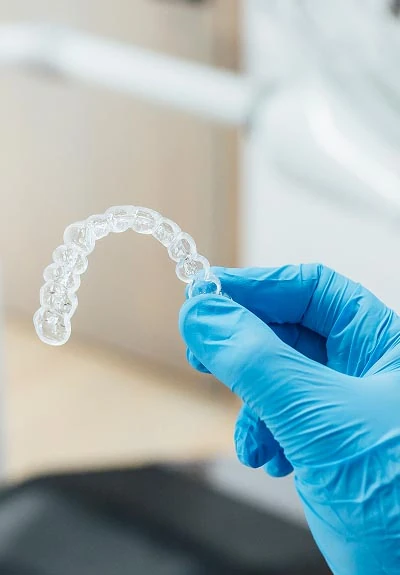
Spark and Invisalign are both doctor-directed clear aligner systems, and both can treat the same range of common cases. The real differences are the tray material and how visible it stays; the bigger variable is the orthodontist planning your treatment.
Patients almost always arrive having compared brands online and having never compared treatment plans. That is backwards, and this post explains why, without pretending the brands are identical.
What Are Spark and Invisalign?
Spark aligners
Spark uses next-generation materials and precise technology to deliver a discreet, comfortable and effective aligner experience. Their ultra-transparent finish makes them one of the most discreet aligner systems available. We are a proud provider of Spark Clear Aligners in Framingham.
Invisalign
Invisalign is the most established clear aligner system in the world and has the longest clinical track record, the widest range of documented case types and the most familiar name to patients. We treat with Invisalign as well.
What they have in common
Both are removable, both use a series of trays that move teeth in small increments, both frequently use small tooth-colored attachments to grip the teeth for specific movements, both require roughly 20 to 22 hours of daily wear, and both end with retainers. Neither works while it is sitting in a case on your desk.
How Do Spark and Invisalign Actually Differ?
| Spark | Invisalign | |
|---|---|---|
| Tray material | TruGEN family, engineered for high clarity | SmartTrack, engineered for consistent gentle force |
| Appearance over time | Marketed on staining resistance and clarity | Clear at delivery; clarity depends on care and habits |
| Trimline | Scalloped and polished at the gumline | Straight trimline over the gumline |
| Track record | Newer system, growing case library | Longest clinical history and case library |
| Attachments | Commonly used | Commonly used |
| Case range here | Mild to moderately complex | Mild to complex |
| Retainers after | Required | Required |
Does the material difference matter to you?
For most patients, mildly. Aligner clarity is affected far more by coffee, tea, red wine, smoking and cleaning habits than by which brand is in your mouth. If you drink dark liquids all day and want the least visible tray at week two of every set, that is a real argument for the more stain-resistant option, and it is worth saying out loud at your consultation.
Does one treat harder cases than the other?
Both systems handle crowding, spacing, and many bite corrections. Complex bite problems, significant rotations of round teeth, and cases needing skeletal correction are where planning, attachment design and sometimes fixed appliances matter more than brand. If a case is genuinely better served by braces, we will say so rather than sell you trays.
Which Clear Aligner Is Right for You?
Choose based on the plan, not the box
Aligners do not move teeth; the treatment plan does. Ask how many trays are projected, where attachments will go, what the refinement policy is, how often you will be seen, and what the retainer plan looks like afterward. Two offices using the identical brand can produce very different results, and that gap is larger than the gap between Spark and Invisalign.
Adults
Teeth shift over time from aging, grinding, tooth loss or past orthodontic relapse, and small changes affect confidence, cleaning and wear. Adult clear aligner treatment is usually about correcting that drift discreetly while working and socializing normally.
Teens and children
Compliance is the deciding factor at these ages, not brand. Aligners for kids work well for motivated patients, while growing patients with bite issues sometimes need interceptive treatment first. Dr. Campos places a strong emphasis on interceptive orthodontics, addressing early malocclusions before they become bigger problems.
If you are still weighing braces
Our post on braces versus clear aligners for adults covers that comparison, which is a different question from choosing between two aligner brands.
What Does Aligner Treatment Cost in Framingham?
Cost tracks case complexity and treatment length far more than brand. At Cochituate Smile Center, orthodontic treatment, braces or clear aligners, is available from as low as $197 per month for a limited time, and we offer 0% interest financing with a down payment on any orthodontic treatment. Our insurance and financing page covers how that works alongside dental benefits.
What actually drives the price
Case complexity and treatment length come first: more movement means more trays, more chair time and more monitoring. Whether refinements are included, whether retainers are bundled, and how many progress visits the plan anticipates all move the number as well. Two quotes that look far apart often differ in what they include rather than in what they charge per month.
How to compare two quotes fairly
Ask each office for the total fee, what is included after the final tray, the refinement policy, and the monthly figure with the down payment stated. Comparing monthly numbers alone rewards whichever office stretched the term the furthest, which is not the same as being less expensive.
Beware of any quote given before records are taken. A number produced without imaging is a guess, whichever brand it is attached to.
What Does Clear Aligner Treatment Look Like Step by Step?
Records and planning
Treatment starts with a digital scan, photographs and X-rays. From those records the orthodontist plans the sequence of movements, decides where attachments are needed, and projects how many trays the case should take. This planning stage is where results are actually determined, long before the first tray arrives.
Delivery and the first weeks
At the delivery appointment attachments are bonded, the fit is checked, and you learn how to seat and remove the trays properly. Pressure and mild soreness for a day or two after each new set is normal and means the trays are working. Most people adjust to speaking with them within a week.
Progress checks and refinements
You will be seen periodically to confirm the teeth are tracking with the plan. If a tooth lags behind, a refinement scan produces a revised set of trays. Refinements are routine in aligner treatment with either brand, not a sign that something went wrong.
Retention
Treatment finishes with retainers, and the retainer phase is permanent in the sense that some level of retention continues for life. Plan for it from the beginning rather than treating it as an afterthought.
What Do Both Systems Require From You?
Wear time is the whole game
Roughly 20 to 22 hours a day, every day. Trays come out to eat and to drink anything other than water, and go straight back in. The patients who finish on schedule are simply the ones who wear them.
Cleaning habits decide how invisible they look
Rinse trays when you remove them, brush before reinserting, and avoid coffee, tea and red wine while wearing them. Clarity claims from any manufacturer assume this; without it, the most stain-resistant tray on the market still looks dull by day ten.
Honesty at the consultation
If you know you will not wear a removable appliance consistently, say so. Fixed braces are not a punishment, they are a better tool for that situation, and choosing the wrong one costs months. Our doctors would rather have that conversation on day one.
Are You a Good Candidate for Clear Aligners?
Cases that usually work well
Mild to moderate crowding, spacing and gaps, relapse after previous orthodontic treatment, and many bite corrections respond predictably to aligners in adults and cooperative teens. If your main complaint is that a few front teeth have drifted over the years, you are close to the center of the target.
Cases that need a closer look
Significantly rotated round teeth such as premolars, teeth that need to move vertically into position, large discrepancies between the upper and lower jaws, and missing teeth that need space managed for future restorations all require careful planning. Some of these are still aligner cases; some are better treated with braces or with a combination approach.
Health first, alignment second
Active decay and untreated gum disease are addressed before orthodontic treatment starts, because moving teeth through inflamed tissue is a bad trade. Having general dentistry and orthodontics under one roof means that sequencing happens in one place instead of across two practices with two schedules.
Common Myths Worth Clearing Up
“Clear aligners are only cosmetic”
Alignment affects how teeth wear, how easily they can be cleaned, and how forces are distributed when you chew. Straightening teeth is frequently a functional and hygiene decision that happens to look better as well.
“Mail-order aligners are the same thing for less”
Doctor-directed treatment includes an in-person exam, X-rays, attachments where movements require them, and supervision that can correct course when a tooth does not track. Remote models skip parts of that, and the savings evaporate quickly if a case stalls or a bite problem is missed.
“Any office can deliver the same result with the same brand”
This is the myth that costs patients the most. The brand supplies trays; the orthodontist decides the movements, the staging, the attachments and when to intervene. Ask about the plan, and ask who is planning it.
How Long Does Treatment Take, and What Happens Afterward?
Typical treatment length
Minor corrections can finish in a few months; comprehensive cases commonly run a year or more. The projected number of trays from your plan is a better estimate than any brand-level average, because it is built from your teeth rather than someone else’s.
What makes treatment run long
Inconsistent wear is the leading cause, followed by trays that are not fully seated and by skipped progress visits. Chewies, careful seating and keeping appointments do more for your finish date than any brand decision made at the start.
Retainer options after your last tray
Removable clear retainers are the most common follow-on to aligner treatment because the habit is already established. A bonded wire behind the lower front teeth is an option when relapse risk is higher. Many patients end up with both, worn on different schedules, and the plan should be explained to you before treatment ends rather than at the final visit.
Keeping the result healthy
Straight teeth still need routine care. Continuing regular cleanings and exams protects the investment, and our post on how often to get a dental cleaning explains why that cadence matters more than most people expect after orthodontic treatment.
How Do Clear Aligners Compare With Braces for the Same Case?
When aligners are the better tool
Crowding, spacing, mild relapse after earlier orthodontics and many bite corrections respond well to aligners when wear is consistent. Adults who present in front of patients or clients all day usually value the appearance, and the trade-off is control: aligners only move teeth while they are in your mouth.
When fixed braces still win
Severe rotations, teeth that need significant vertical movement, and cases relying on tight control of individual roots are often more predictable with brackets and wire. Aligners can still finish those cases, but the plan may involve more refinements than a bracketed approach would need, and that trade-off should be stated up front rather than discovered halfway through.
Hybrid plans exist
Some treatment plans use fixed appliances for a few months to handle the hardest movements, then finish in aligners. That option rarely appears in brand marketing because it does not fit neatly into either category, but it can shorten the overall timeline.
Why the diagnosis outranks the brand
Every point above is a decision about your teeth, not about Spark or Invisalign. Two offices using the same brand can produce very different results depending on how the movements are sequenced and how closely progress is monitored between visits.
What Should You Ask Before You Commit?
Ask what the plan actually treats
Ask which movements are being planned, how many trays are projected, and what happens if the teeth do not track. A clear answer to those three questions tells you more about the office than any brand comparison chart.
Ask who monitors your progress
Ask whether an orthodontist reviews your progress at each visit. At Cochituate Smile Center, aligner cases are planned and monitored by Dr. Hugo Campos, who has practiced orthodontics for more than twenty years and teaches at Tufts University School of Dental Medicine.
Ask what the fee includes
Refinement trays, retainers and follow-up visits are the three items most often left out of a quoted number. Confirm all three in writing before you start so the total is not a surprise at the end of treatment.
Frequently Asked Questions About Spark and Invisalign
Which one is faster?
Neither brand is inherently faster. Treatment length depends on how far the teeth have to move and how consistently the trays are worn. Missed wear time is the single most common reason treatment runs long.
Do both use attachments?
Yes. Both systems commonly use small tooth-colored attachments bonded to specific teeth to produce movements that a smooth tray cannot achieve on its own. They are removed at the end of treatment.
Will my teeth stay straight afterward?
Only with retainers. Relapse after any orthodontic treatment is normal biology, not a failure of the system, which is why retention is part of the plan from the start with both brands.
Can I switch systems mid-treatment?
It is possible but rarely ideal, because a new set of records and a new plan are required. It is far better to have the right conversation before the first tray than to restart halfway through.
Compare Both Systems With an Orthodontist Who Teaches This
Dr. Hugo Campos has been transforming smiles as an orthodontist for over 20 years and treats with both traditional braces and advanced techniques including aligners and self-ligating braces, and both of our doctors are professors at Tufts University School of Dental Medicine. Book a free consult at 254 Cochituate Rd in Framingham, or call (508) 875-1060, and compare the plans rather than the brochures.
Leave a Reply